
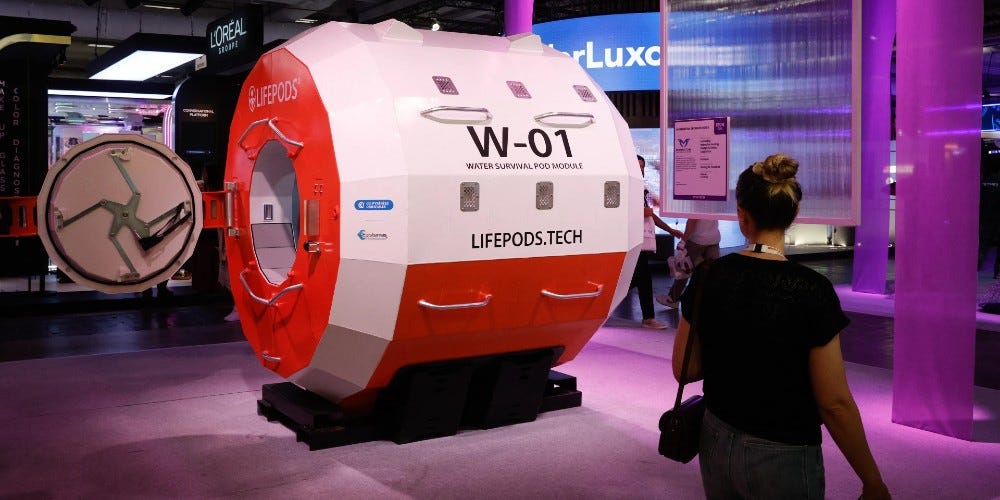
A French startup wants to sell you a lifeboat for dry land. Momentum Technologies unveiled its LifePods survival capsules at the VivaTech and Eurosatory trade shows this summer, and the pitch is simple enough to fit on a bumper sticker. When the grid fails, the water rises, or the shooting starts, you climb in, lock the hatch, and wait for the world to sort itself out.
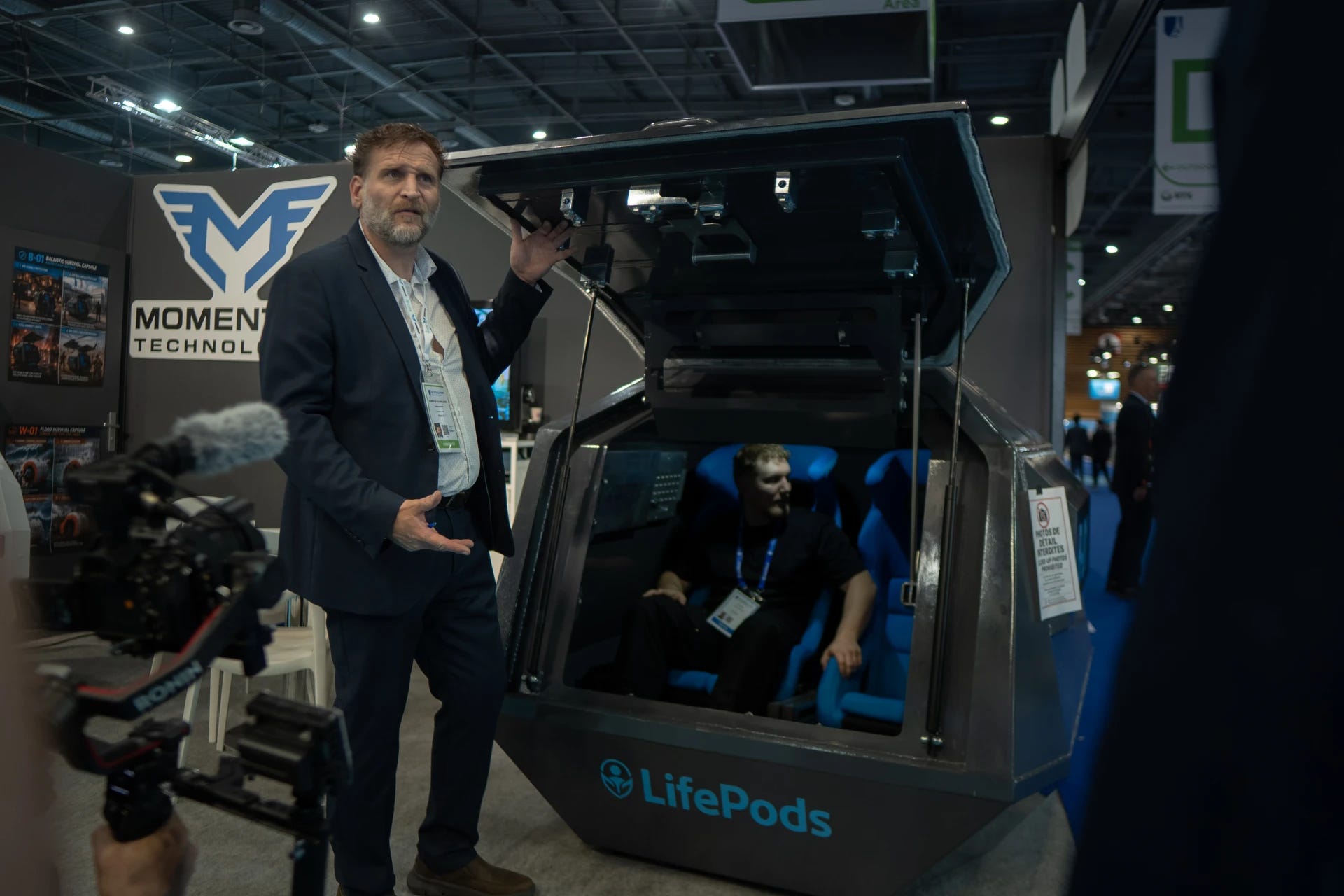
The company offers two commercial models. The B-01 is an armored land capsule, roughly 4,000 pounds of high-hardness ballistic steel built for one or two occupants, marketed toward critical infrastructure sites, checkpoints, and security teams. Representative armor panels have already passed VPAM PM7 certification, meaning they stopped 7.62x51mm rifle rounds, though the complete capsule with its doors, joints, and ventilation still awaits final validation.
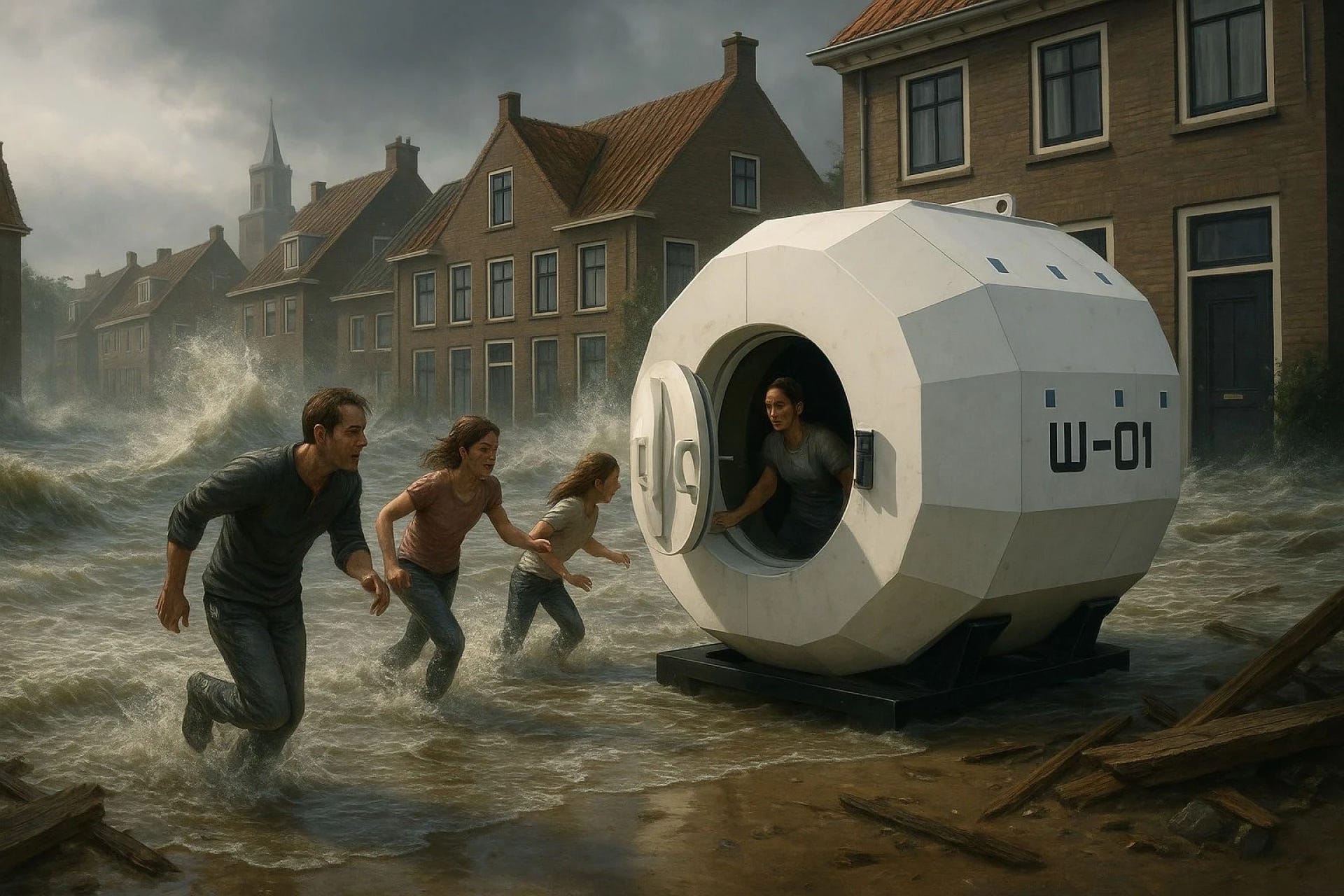
The W-01 is the more relatable of the pair, a floating capsule designed to carry four adults through tsunamis, storm surges, and dam failures, complete with exterior grab bars for survivors in the water and a distress beacon to help rescuers find it. An earthquake-focused Q-01 remains a concept on the drawing board.
Neither one is cheap. Momentum lists the B-01 at 25,000 euros and the W-01 at 31,000 euros before European VAT, which works out to roughly $27,000 and $33,500 before shipping, customs, and installation pile on. First production units are expected out of Barcelona in October, with American deliveries beginning around November through a commercial partner based in San Diego, assuming the certification program stays on schedule.
Why This Product Exists Now
Laugh at the price tag if you want, but pay attention to the market signal. Products like this do not emerge in societies that trust their institutions. They emerge when ordinary people have watched enough failures, rolling blackouts, flash floods that outrun evacuation orders, police response times measured in coffee breaks, to conclude that the last line of defense is the one they purchase themselves.
Momentum says the idea traces back to the tsunamis of 2004 and 2011, when the world learned how few last-resort options exist once evacuation is no longer possible. That is a sober and legitimate engineering problem. But the company is also candid that demand is being driven by geopolitical instability and infrastructure fragility, and its target customers include energy stations, telecom hubs, and transport terminals.
The people who run critical infrastructure are quietly buying armored boxes to hide in. Draw your own conclusions about how confident they are in the systems the rest of us are told to rely on.
This is the preparedness instinct that the sneering class spent decades mocking as paranoia. The generator, the stored water, the defensive firearm, the food supply, all of it was supposedly evidence of a bunker mentality.
Then came 2020, then the Texas grid collapse, then a string of hurricanes and wildfires where official help arrived days late, and suddenly self-reliance looks less like paranoia and more like pattern recognition. LifePods is simply the luxury-market expression of a conviction millions of Americans arrived at the hard way.
A Healthy Dose of Skepticism
None of this means anyone should wire $30,000 to Barcelona tomorrow. The W-01 has never touched real water. Its performance so far exists in naval engineering simulations, with physical flotation trials and sea testing not expected until the back half of this year.
The B-01’s armor panels are proven, but a panel is not a capsule, and survival equipment has a long history of looking invincible at trade shows and failing at the weld seams. Anyone serious about a purchase should demand completed certifications and independent testing, not renderings and press releases.
There is also a more fundamental point. A capsule is a last resort, not a plan. Momentum itself admits the pods are meant to complement evacuation and prevention, not replace them. For most families, realistic preparedness still means knowing your flood risk, keeping food, water, and backup power on hand, and having a plan your household actually rehearses. The unglamorous basics save far more lives than any steel egg ever will.
Scripture gives us the original survival capsule story, and it is worth remembering what made it work.
By faith Noah, being warned of God of things not seen as yet, moved with fear, prepared an ark to the saving of his house; by the which he condemned the world, and became heir of the righteousness which is by faith. (Hebrews 11:7)
Noah did not wait for the rain to start building. Preparation undertaken in calm, guided by wisdom rather than panic, is not faithlessness. It is stewardship of the household God gave you.
Whether LifePods becomes a serious tool for high-risk regions or an expensive curiosity for anxious millionaires will depend on the testing still to come. Either way, the deeper story is already written. When people stop believing the cavalry is coming, they start building their own ark.
You should be prepared with the best resources you have or can afford. If you have lots of money around and these are proven, it might be worth it but it is GOD who saves.